Neuroaffirming Therapy for ADHD, Trauma, Emotional Regulation, and School Challenges in Amherstburg, LaSalle, Windsor-Essex, and Across Ontario
Amanda Holland provides neuroaffirming, trauma-informed therapy for children, teens, adults, and families, with support for ADHD, emotional intensity, school anxiety, school avoidance, attachment concerns, and complex trauma in Amherstburg and virtually across Ontario.

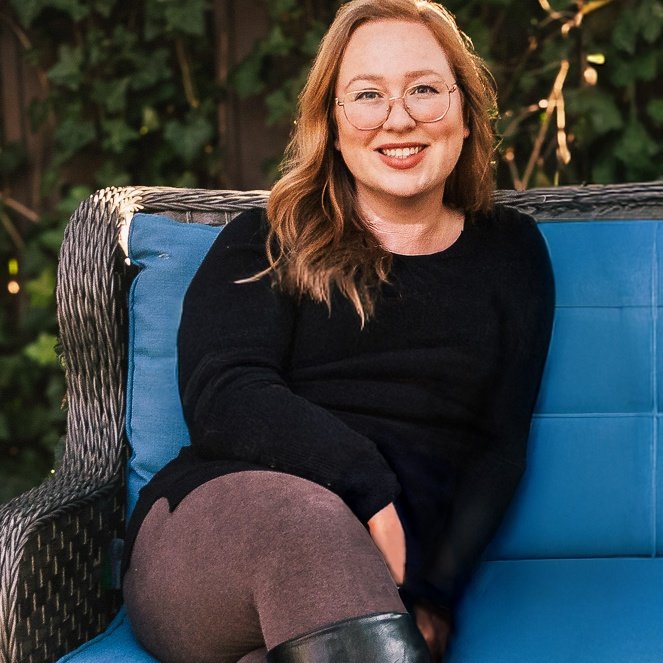
Your Fire is Safe With Me
Therapy for wild, spirited, sensitive, fierce, and wonderfully unique humans.
We grow when we are
truly and Delightfully
Seen.
Building confidence, connection, regulation, resilience, and a strong sense of self.
Foundations of My Practice ↓
My work is informed by:
- Developmental psychology and human development
- The neurodiversity paradigm
- Anti-oppressive and liberation-oriented perspectives
- Neurobiology and nervous system regulation
- Trauma- and attachment-informed approaches
Approaches that may be integrated when appropriate include:
- Delight-Centered Neuroaffirming Therapy (developing clinical framework) → Learn More
- EMDR
- Parts Work
- Dyadic Developmental Psychotherapy (DDP)
- Theraplay
- Collaborative & Proactive Solutions (Ross Greene)
✦ More detailed pages are coming soon ✦
In the meantime, you can learn more about me and my background here:
Yes — I work with adults across Ontario, both virtually and in-person in Amherstburg. Many of the adults I support are navigating the lasting impact of childhood experiences or trauma, burnout and overwhelm, relationship and attachment patterns, parenting neurodivergent children, and making sense of their own neurodivergence including ADHD.
My approach is neurodiversity-affirming, trauma- and attachment-informed, and grounded in understanding how your experiences have shaped the way your nervous system responds to the world. Therapy is not about fixing you — it is about understanding you, supporting your nervous system, and helping you move through life with more clarity, self-trust, and flexibility.
Yes. I support children who have experienced trauma, stress, or overwhelming life events — including children who may show this through anxiety, emotional outbursts, shutdown, school avoidance, or behavioural challenges. My work is grounded in trauma- and attachment-informed approaches, including Theraplay-, DDP-, and EMDR-informed care.
With children, therapy often focuses on building a sense of safety and trust, supporting regulation and emotional expression, strengthening the parent-child relationship, and helping adults understand what the child's behaviour is communicating.
Anything under 15 minutes is free. Sessions are $145 for a 60-minute therapy hour. You will never be charged for anything we have not discussed in advance.
In many cases, yes. Many families in Amherstburg, LaSalle, Windsor, and across Ontario have extended health benefits that cover services provided by a Registered Social Worker (MSW, RSW). Coverage varies by plan.
After each session, you will receive a receipt that can be submitted for reimbursement. OHIP does not cover private therapy services. Therapy expenses may be eligible as a medical expense on your taxes.
If you are unsure how to check your coverage, I am happy to help guide you.
Yes — I offer a free 15-minute consultation to see if we are a good fit, and brief consultation time as needed for caregivers or education teams. Book at amandaholland.janeapp.com.
School refusal or school avoidance usually means a child has hit their limit. Anxiety, sensory overwhelm, social stress, or a poor fit between the child and their environment can all make school feel impossible — even if it doesn't look that way from the outside.
You're not alone. Many families in Amherstburg, LaSalle, Windsor, and across Windsor-Essex reach out when school starts to feel this hard.
This isn't about forcing them through it. It's about understanding what's making school feel impossible — and building a way forward that actually works for their unique self.
If this is what your family is navigating, support can make this feel more manageable. You can book a free 15-minute consultation to talk it through.
What helps most is understanding how your child's ADHD brain works — and not trying to make it work like everyone else's.
ADHD support at school often starts with recognizing that this is not about laziness, lack of intelligence, or not trying hard enough. It is about helping a child with a highly curious, often intensely driven brain do their best within systems that rely heavily on sustained focus, stillness, and output.
Support often looks like: helping your child understand themselves and build a strong, positive sense of identity; exploring strengths, interests, and role models; reducing distress linked to "I'm broken" beliefs; supporting flexibility between the child and their environment; helping your child understand their body and ask for what they need; and supporting the adults around them in seeing and responding differently.
The goal is to help your child maintain a healthy relationship with themselves and the people who matter most — while building understanding, getting needs met, and finding practical ways forward that work in real life.
No. What gets called ODD is often a mix of stress, frustration, and a nervous system that pushes back when something doesn't feel safe or doable.
When we shift from control to collaboration, things often begin to change. Dr. Ross Greene's Collaborative & Proactive Solutions (CPS) model is one of the most widely used approaches for supporting children with these patterns.
No. Current research does not support screen time as a cause of ADHD or ODD. ADHD is a neurodevelopmental difference — it is not created by screens. ADHD characteristics have existed throughout human history, and many of the strengths associated with ADHD have long played meaningful roles in communities.
Screens can sometimes intensify challenges around transitions, sleep, or regulation — but this is about context and use, not cause. A balanced approach often includes structure, supervision, and ensuring screens are not interfering with connection, movement, or basic needs like sleep and eating.
Then you are exactly where you are supposed to be.
Many parents are carrying more than they were ever meant to hold alone. You are not the only one feeling this way — and you do not have to do this by yourself.
Start small. Inclusive practice does not have to mean doing everything differently all at once.
Many educators are working incredibly hard within systems that are stretched. This is not about doing more — it is about doing things differently within what already exists.
The core shift: instead of asking "How do I get this child to meet expectations?" — ask "What is getting in the way, and how can we reduce that?"
Small shifts make a meaningful difference: pause expectations briefly for a reset; reduce unnecessary demands; focus on regulation before expectation; allow flexible ways to engage and demonstrate learning.
And sometimes, one of the most powerful shifts is internal: quietly holding the belief that when a child is struggling, it does not mean something is wrong with them — and it does not mean something is wrong with you.
Because they have been holding it together all day.
School often requires sustained attention, emotional control, and social navigation. For some students, that takes everything they have. What you see at school is often their maximum effort. What families see at home is what happens after that effort runs out.
The goal is to reduce escalation early, not win a power struggle. The instinct to "hold the line" is understandable — but with ODD-presenting students, it can increase escalation.
What tends to help: noticing early signs and pausing expectations briefly; offering a quick reset; reconnecting calmly; reducing power struggles; staying collaborative; focusing on the problem rather than the behaviour. The expectation can remain, while supporting the student's ability to meet it.
Dr. Ross Greene's CPS model is commonly used in these situations.
Your calm is the intervention. In the moment, the goal is not to fix — it is to avoid adding more stress.
Less: talking, questioning, correcting. More: space, presence, calm neutral tone.
Once the student is more regulated, learning can resume.
Start with curiosity. Parents of children who are struggling often already feel blamed.
Helpful starting points: "What are you noticing at home?" and "What works well for them?" Avoid jumping to conclusions. The goal is shared understanding, not immediate agreement.
DCNT is a therapeutic framework I developed in response to a common pattern: neurodivergent children often receive significantly more corrective messaging than their peers from a very early age.
This approach aims to counterbalance that by supporting identity development, self-understanding, and confidence. It integrates attachment theory, trauma-informed care, the neurodiversity paradigm, and neuroscience and research on development and resilience.
The goal is not only skill-building, but helping children develop a strong, stable sense of self while navigating complex environments.
Yes — though not by asking children to override their bodies. The focus is on understanding their nervous system, recognizing what supports a sense of safety, and developing regulation strategies that are sustainable and individualized.
Yes. I regularly collaborate with schools in Amherstburg, LaSalle, Windsor-Essex, and virtually across Ontario. The goal is to support alignment between home, school, and the child — with practical, realistic strategies.
My work is informed by EMDR, Parts Work, Theraplay, Dyadic Developmental Psychotherapy (DDP), and Collaborative & Proactive Solutions (CPS) — all within a neuroaffirming, attachment-informed lens.
Yes. I offer professional development, training, and educational consultation for educators, EAs, CYCs, ECEs, school counsellors, administrators, and school boards across Ontario — in-person in Windsor-Essex and virtually province-wide. Reach out at connect@amandaholland.ca to discuss what your team needs.
Ready to connect?
Reach out via call, text, or email — no pressure, no worksheets. Just a conversation to see if we're a good fit.
Amherstburg, ON
Video · Phone · Virtual across Ontario